Letter revoking a VAT option to tax
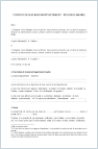
If you exercise the option to tax a commercial property for VAT purposes it is irrevocable except in a few situations. If you do want to revoke the option, use our letter to help ensure that you send the correct documents and information to HMRC so that it is effective.
About the letter
Once made there are only three situations where you can revoke an option to tax:
- by notification within six months of the option being made (a cooling-off period)
- automatically six years after the interest in the land or building has been disposed of
- by notification where more than 20 years have elapsed since the option was made, and certain conditions are met.
Revocation is subject to conditions which are detailed in HMRC’s VAT Notice 742A (http://tinyurl.com/k5azk4p).
To revoke under either the first or third option, you need to complete the appropriate form - VAT1614C or VAT1614J respectively; however, we also recommend sending a covering letter with the form.
How to use
Use our Revoking Option to Tax Letter to create a letter to accompany a notice VAT1614C or VAT 1614J. You will need to enter the date the option was made, and the details of the commercial property that was subject to the option. We have designed the letter so that you can use it to revoke an option to tax within the six-month cooling off period or after 20 years. Delete the section of the form which isn’t applicable.
Note. If you don’t complete and send a VAT1614C or VAT1614J, your revocation won’t be processed.
Related Topics
-
Ravanelli scores victory against HMRC over £340,000 NI dispute
Former footballer Fabrizio Ravanelli has won a High Court challenge against HMRC over £340,000 of NI paid as part of an employee benefit trust settlement. The judge found that HMRC had misunderstood the law when refusing to reconsider the settlement. Does this mean the former striker will get his money back?
-
Salary vs dividends: the employment allowance angle
When it comes to extracting profits from your company, you can’t go too far wrong with the old faithful: low salary topped up with dividends. But, if the employment allowance is available, might you be better off using it to the full extent?
-
Welsh landlords to face higher income tax rates from April
The Welsh Government has confirmed its intention to follow the UK's higher property income tax rates from April 2027, despite gaining the power to set its own rates. The decision, included in the draft Welsh Budget for 2027/28, means landlords in Wales won't escape the tax increases announced in October. How much extra could you pay?